Global Market Trends, Growth Drivers and Opportunities
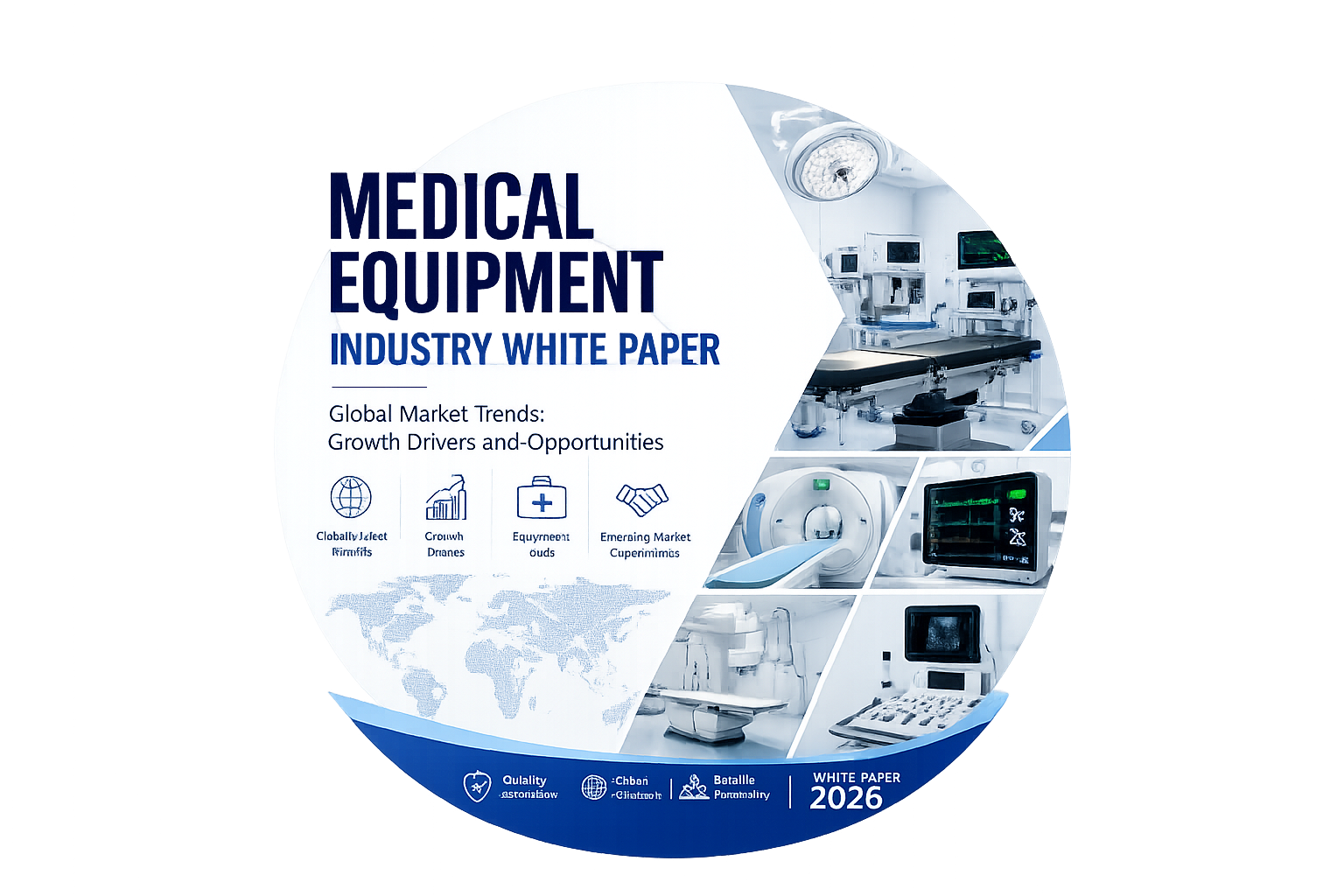
The medical equipment industry refers to the global sector that develops, manufactures, and distributes devices used for diagnosing, monitoring, and treating diseases. These products range from basic tools to advanced imaging systems and life-support machines.
Medical devices play a critical role in modern healthcare by enabling early diagnosis, improving treatment outcomes, and supporting patient monitoring across hospitals, clinics, and home care environments.
The medical equipment industry refers to the global sector that develops, manufactures, and distributes devices used for diagnosing, monitoring, and treating diseases. These products range from basic tools to advanced
imaging systems and life-support machines.
Medical devices play a critical role in modern healthcare by enabling early diagnosis, improving treatment outcomes, and supporting patient monitoring across hospitals, clinics, and home care environments.
The global medical equipment market continues to expand steadily, driven by increasing healthcare demand worldwide.
• Market value exceeds $500 billion
• Stable long-term growth expected
• Average CAGR between 4.9% and 8%
Key Growth Drivers
• Aging population and chronic disease growth
• Expansion of healthcare infrastructure
• Rising demand in emerging markets
• Technological innovation including AI in healthcare and digital healthcare
3.1 Diagnostic Imaging Equipment
• X-ray systems (DR, C-arm)
• CT scanners
• MRI systems
•Ultrasound devices
These systems are essential for early diagnosis and represent one of the highest-value segments in the diagnostic imaging equipment market.
3.2 Therapeutic and Surgical Equipment
• Ventilators
• Anesthesia machines
• Operating room equipment
3.3 Patient Monitoring Devices
• Patient monitors
• Infusion pumps
Critical for ICU equipment and long-term care environments.
3.4 Medical Consumables
• Disposable medical supplies
• Diagnostic reagents
• Provide stable and recurring demand in the medical consumables segment.
The medical device market segmentation is structured by product type, application, and region, with strong growth in emerging economies due to infrastructure development and increasing healthcare investment.
Emerging medical equipment markets present the most significant growth opportunities due to unmet medical needs and rapid healthcare expansion.
Africa: Strong demand for basic diagnostic and imaging equipment
Central Asia: High dependence on imported medical devices
Middle East: Growing private healthcare sector
South America: Large market with regulatory complexity but strong long-term potential
Digital Healthcare and AI
AI-assisted diagnostics and smart imaging systems are becoming increasingly important in the medical technology trends landscape.
Portable Equipment
Mobile X-ray and portable ultrasound devices are expanding access to care and driving demand for portable medical equipment.
Remote Monitoring
Telemedicine and remote patient monitoring solutions are growing rapidly.
Minimally Invasive Technology
Minimally invasive medical devices are enabling faster recovery and reduced hospital stays.
The medical equipment supply chain includes manufacturers, distributors, and healthcare providers.
Working with a professional medical equipment supplier or trading company allows buyers to access multi-product sourcing, flexible solutions, and integrated project support.
• Buyers typically evaluate:
• Product quality and reliability
• Certifications (CE, FDA, ISO13485)
• Pricing and cost-performance ratio
• After-sales service capability
• Delivery time
• Ability to provide hospital equipment solutions
• Complex medical device regulations
• Certification requirements
• Limited technical support in some regions
• Equipment maintenance challenges
Understanding regional procurement characteristics is essential for successful medical equipment procurement and project execution.
Africa
• Procurement is often driven by government tenders, NGOs, and international aid programs
• Strong demand for cost-effective and durable equipment
• Preference for hospital turnkey solutions rather than single devices
• After-sales service and training are critical decision factors
Central Asia
• Markets rely heavily on imported medical equipment
• Local distributors play a key role in procurement
• Buyers are highly price-sensitive but require stable quality
• Long-term partnerships are preferred
Middle East
• Dual demand structure: high-end private hospitals and mid-range public healthcare
• Strong emphasis on international certifications and brand reputation
• Faster adoption of advanced technologies
• Turnkey hospital projects are common
South America (Brazil, Argentina)
• Complex regulatory and registration processes
• Local compliance and certification are essential
• Hospitals focus on long-term reliability and service support
• Growing demand for mid-to-high-end equipment
Hospital equipment planning must align with healthcare level, patient capacity, and clinical functions.
Basic Hospital Configuration
• Diagnostic imaging (X-ray, ultrasound)
• Laboratory equipment
• Basic patient monitoring systems
Secondary Hospital Configuration
• Advanced imaging (DR systems, CT)
• Operating room equipment
• ICU monitoring systems
Tertiary Hospital Configuration
• Full imaging suite (CT, MRI, C-arm)
• Specialized surgical equipment
• Intensive care systems
• Integrated hospital information systems
Choosing the right medical imaging equipment depends on clinical needs, budget, and application scenarios.
DR (Digital Radiography)
• Suitable for general radiography
• Cost-effective and widely used
• Ideal for hospitals and clinics
C-arm X-ray System
• Used in surgery and interventional procedures
• Provides real-time imaging
• ssential for operating room imaging
CT Scanner
• High-resolution cross-sectional imaging
• Used for complex diagnosis
• Higher cost but critical for advanced hospitals
ICU Equipment Configuration
A standard ICU equipment setup should include:
• Patient monitoring systems
• Ventilators
• Infusion pumps
• Defibrillators
• Oxygen supply systems
ICU design should prioritize continuous monitoring, rapid response capability, and equipment integration.
Operating Room Equipment Configuration
A modern operating room equipment setup typically includes:
• Surgical table
• Surgical lighting system
• Anesthesia machine
• C-arm imaging system
• Sterilization equipment
Advanced operating rooms may also include integrated digital systems and imaging guidance.
The medical equipment industry will continue to grow steadily, supported by global healthcare demand, technological innovation, and expansion in emerging markets.
Companies that can provide integrated medical equipment solutions, strong supply chain capabilities, and localized service support will be best positioned to succeed in the global market.
Appendix
Common Certifications in Medical Equipment Industry
• CE Certification (European Union)
• FDA Approval (United States)
• ISO 13485 (Quality Management System)
In global healthcare infrastructure development, selecting and configuring the appropriate hospital equipment is critical to ensuring operational efficiency and clinical reliability.Our team provides technical consultation and integrated support for international healthcare projects, including:
• Hospital equipment planning and system configuration
• Medical imaging solutions (DR, C-arm, CT, Ultrasound)
• ICU and operating room equipment integration
• Multi-category equipment sourcing and project coordination
• Technical documentation and after-sales support
We work with healthcare institutions and distributors across Africa, Central Asia, the Middle East, and South America, supporting diverse project requirements with practical and cost-effective solutions.
Welcome to Shuyuan Runjing Medical
Your Premier Partner for Compliant Medical Device Manufacturing.We partner with you to develop successful product lines at your target budget, meeting the demands of both institutional and consumer markets.
We produce in China, so you will benefit from faster and more sustainable production, which fully aligns with China’s design aspirations and quality expectations.
+86 18911034031
Beijing Shuyuan Runjing Medical Technology Co.,Ltd. All rights reserved.